Thursday, March 28, 2013

United We Play

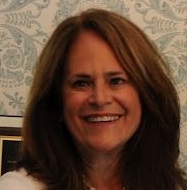
jo ann cropRecently I blogged about one of those heartwarming stories where an individual with a disability gets a moment “in the sun” to switch from team manager and play the final seconds in a basketball game or catch a pass in a football game.


I acknowledged the “feel good” nature of the story and the joy and happiness it brings to the individual, their family and to the community. I also questioned whether it was actually helping us achieve a truly inclusive society that values everyone.

What I probably should have said is that we need examples of real opportunities and not “tokens”. Tokenism does not move us forward. Fortunately, I did not have to wait long to see real opportunities.

Two weeks ago, in Worcester, Massachusetts and other locations in central and western Massachusetts, almost a thousand athletes competed in the Winter Games of Special Olympics Massachusetts. I was among the proud spectators who watched almost a dozen Unified basketball games.

Unified we pass and shoot

Unified Sports actually began in Massachusetts and is now part of every single Special Olympic sport throughout the world. Unified Sports is dedicated to promoting inclusion through shared sports training and competition experiences. Unified Sports are joint teams of people with and without intellectual disabilities. It was inspired by a simple principle: training together and playing together is a quick path to friendship and understanding. It has been my experience that it also leads to developing a social network which can result in job leads and employment opportunities.


In Unified Sports, teams consist of people of similar age and ability, which makes practices more fun and games more challenging and exciting for all. I was particularly drawn to my son’s team, LIFE Force, and I watched them play with heart, dedication, determination and skill. They were well coached, trained and disciplined.


They came in fourth, missing the medal round after posting a 1-3 record. Each of their losses was decided by a basket. The play was physical- there were elbows, blocking and a player even took a fist to the face. It was a real basketball game and it was well refereed.

Their lone win, the last game played, came after an emotional pep talk by their coach to the team to remind them that they were playing for Chris, a team member who had recently died after a short bout with cancer.

There were hundreds of “feel good” moments for me and among them was the selfless passing of our son, Jon, the points he scored but nothing greater than the grace he displayed in losing. Of not being on the medal stand and telling me that while he wished they had won, he made “many new friends this season.”

Every time Jon sets foot on a basketball court, soccer field or a golf course, he enjoys “days in the sun” and they are more important than a moment.

This originally appeared on the blog, Zeh Lezah of the Ruderman Family Foundation.

Thursday, March 7, 2013

Being All We Can Be


By Jo Ann Simons

Can you see both sides of a story or is that being wishy washy? I ask myself that each time the television brings us another story of a student with autism making a three pointer on his only appearance in a high school game or the kid with Down syndrome suiting up for a play on the varsity football team. Is it inclusion or exploitation? Is it something to celebrate or something to discourage?

No doubt the events bring positive exposure and feelings of great joy to the individual, the family and even their community.

I think it might actually set us back on the road to a society where diversity is valued and embraced.

In the fight for inclusion, we are asking for acceptance. We are asking to be given the same opportunities as others. So, why does this bother me so much?

We can’t all be athletes

Not everyone makes the varsity athletic teams. That is why junior varsity and club sports exist- for the enthusiast without the skills to compete at the highest level. Some of the most enthusiastic lovers of sport do not have athletic skills and there are still meaningful roles for them to fill- managers, coaches, trainers, announcers, statisticians, locker room attendants. Bob, our usher at Fenway Park loves baseball and the Red Sox more than the next guy but, that does not give him the opportunity to take batting practice with the team.

Likewise, my daughter, in spite of many years of playing field hockey, never made the varsity team nor was she given the opportunity to suit up for a play that was “set up” to make her feel good. Her softball coach suggested she might find another sport. Such is real life. In the era where everyone is a winner, she learned the truth. It might have been the most important life lesson she learned.

When Jon, my son with Down syndrome, announced at age 12 that he wanted to coach the Boston Celtics, I shared with him the truth-gently. I told him that most coaches were former NBA players and he was not going to be tall enough and even his father was not good enough to be an NBA player. However, if he wanted to be a coach, he could. We would find a team where he could help. We talked about helping out the “Biddy Basketball” team at the JCC. Later, Jon did help and he went on to manage his high school basketball team and today he helps out the local middle school team. And he plays Unified Basketball on a Special Olympics team.
basketball
I have no doubt that Jon would have been deliriously happy to have been able to suit up for just one minute of just one game for his high school team. And I know that he would still be talking about it today. I would have also been over the top with happiness with the joy it would have brought to Jon.

It would not have been a good lesson. The world he lives in successfully gives him opportunities to work in his dream environment-on a golf course. He gets to golf as much as he can. It does not give him the opportunity to be a golf pro.

Acceptance for Jon begins with Jon. He has accepted, after a long journey, that he has a disability. He knows he will never be able to some things. He doesn’t dwell on what he won’t be. We celebrate him and that includes his disability. If we try to take it away from him, in ways that are not real, we take away who he is.


Monday, January 14, 2013

Rest in Peace Rex Trailor

A True Pioneer-by Jo Ann Simons


This blog first appeared on the Ruderman Family Foundation blog.
I remember his smile and his voice and I can still shout loudly along with the refrain of the theme song to Boomtown.

"Boom- Boom- Boomtown!”

Boomtown was a weekend children's show on WBZ-TV in Boston that ran from 1956 through 1974. The host was Rex Trailer, a singing cowboy, who died this week at age 84. Rex rode his horse Goldrush onto the western-themed Boomtown studio set for several hours on Saturday and Sunday mornings and into our family’s only television.

My brother and I watched regularly with excitement. Rex showed us, his “posse”, special cowboy tricks and taught us cowboy ways. We were treated to songs and beloved cartoons. I cherished my weekend mornings with Rex Trailer.

Apparently over 200,000 children appeared on Boomtown over the years, and millions more watched from home. Imagine my surprise when I learned decades later that his studio audience had included children with disabilities. While schools were routinely excluding them from an education, they were welcomed as full participating members of his “posse”. I do not recall any of those children on TV as having disabilities-- and I guess that was the point. Could his subtle example of inclusion have helped shape my capacity for acceptance when my son Jonathan was born with Down sin 1979?

In 1961, Rex used his popularity to further propel the movement for respect and dignity. With the organization now known as The Arc of Massachusetts, he led 18 covered wagons across the state from Greenfield to the State House steps to raise awareness of the needs of children with intellectual disabilities. Each evening the wagon train would host a campout and community event for his “posse” and their families. Highlights of the trip would run daily on WBZ-TV and radio so the general public could keep up with the wagon train-- and his with educational message to the public about disabilities.

Not as well-known was his decision, following President John F. Kennedy’s assassination in 1963, to ban weapons from his television show and studio.

By any definition Rex Trailer led an honorable and inspiring life. His life and work was a gift to the people and times in which he lived.

We have never needed a reminder of what one person’s compassion and visionary leadership can accomplish more than we do today.

Rest in Peace, Rex—and treat Goldrush to some carrots from all of us.

Monday, November 12, 2012

We Have Come so Far …. Ann Coulter Notwithstanding


Whenever I see an old Seinfeld episode where Jerry is using one of the first portable phones, it reminds me of how many changes I have seen in my adult life. Those bulky phones now seem primitive. In reality, it wasn’t too long ago when they looked pretty impressive. Now we are walking around with phones the size of a deck of cards that also double as computers.

These thoughts also remind me of the positive changes I have seen in the disability world. We can argue the decision to hire an able-bodied actor to portray the Glee character who uses a wheelchair. But we have to celebrate the producers’ use of Lauren Potter, an actor with Down syndrome, to portray Becky, one of the hit show’s cheerleaders. And it was the decision to hire a 50- year-old actor with Down syndrome to portray Sue Sylvester’s older sister that I celebrated most. Her character died in the second season, but the storyline was realistic. The life expectancy of persons with Down is now close to 60 years old but only a few decades ago it was 20.

Having depicted both a teen and an older adult with disabilities, Glee is bringing another generation of actors into the storyline. Last season ended with Sue revealing her pregnancy, and this season we have learned that baby Robin—named for the actress who played Sue’s sister—also has Down syndrome. While we all wait to see exactly how this will be played out, I took a moment to celebrate how disability is finally being seen as just a part of humanity.

My moment of celebration was cut short when I read about commentator Ann Coulter's recent description of President Obama as a "retard." Despite an outcry from people with disabilities and others, she said she was not sorry for her use of the “R” word.

Coulter defended this with an irrational logic: she claimed the word is synonymous with the word "loser." But that is the whole point… The high school kid who yelled "here comes the retard" as I drove my son to school was calling him a "loser." That is exactly how that kid wanted my son to feel.

So I can’t fully enjoy the progress we have made with Glee, because there are still those like Ann Coulter who just don’t get that the world has changed.

First appeared as a Ruderman Family Foundation blog


Tuesday, June 26, 2012

Sticks and Stones May Break Your Bones But Words Will Never Hurt You

Most of us have heard this saying during our childhood but, it took the student speaker at the graduation of the Cardinal Cushing Centers to really bring into the focus how far it misses the mark. Last month, Erik, began his graduation speech with the usual list of thanks and gratitude but, then he said: “People say that sticks and stones may break your bones, but words will never hurt you. People are wrong. Words do hurt.” Ask any one of our students or adults or their families what they think of the word “retarded” or “retard” and they will tell you.


They hurt. What I can’t understand is why we continue to use words after we have been told they hurt.

Special Olympics, Best Buddies and over 200 other organizations from around the world have joined together to Spread the Word to End the Word™ and build awareness for society to stop and think about its’ use of the R-word. That R-word is something hurtful and painful – “retard” or “retarded.” Most people don’t think of this word as hate speech, but that’s exactly what it feels like to millions of people with intellectual and developmental disabilities, their families and friends. The R-word is just as cruel and offensive as any other slur.

Please join me in raising the consciousness of society and the dehumanizing and hurtful effects of the "R" word and pledge to stop using the word. Please visit http://www.r-word.org/ to take the pledge today to spread the word to end the word.  I did.

PS-Enjoy this slide show of graduation by clicking the link below:

http://www.patriotledger.com/features/x2067832439/Cardinal-Cushing-graduates-expressed-their-joy-in-Hanover

Monday, June 11, 2012

New York’s Justice Center for the Protection of People with Special Needs: A Different Perspective


Congratulations are in order for New York’s Governor Andrew Cuomo, who recently announced sweeping legislation to create the Justice Center for the Protection of People with Special Needs, which would investigate and prosecute allegations of abuse and neglect against people with intellectual disabilities. The Center will have broad powers to independently investigate private and public facilities that receive funding from the state. It will be the largest agency in the country established to protect people with disabilities. This is in response to the widespread reporting of abuse, deaths and even homicides throughout the service system in New York.

While this news was positively received by advocates for people with disabilities, I viewed it from slightly different perspectives.

First of all, why did it take rampant abuse and even death for New York to come to the aid of persons with disabilities being systematically abused? No other minority group would have had to wait as long as people with disabilities in New York are waiting for legal protections. Other states have been quicker to establish these kinds of safeguards.

The press releases emphasized the size of the new structure and while, as a Bostonian, you might accuse me of criticizing everything New York, it is the quality and effectiveness which will be important to me. Not the bragging rights of the biggest.

From what I can tell, only those programs and facilities that receive state funding will come under the scrutiny of this new Center. If we are serious about eliminating abuse against people with disabilities, we must hold entire communities to the same standards. While the assumption seems to be that caretakers are the only ones that abuse people with disabilities, facts and police reports tell a different story — families and friends can abuse, too.

Investigation and prosecution are important tools but, if we want to protect people with intellectual disabilities, we must prevent abuse from occurring. This will only happen when people with disabilities are truly equal members of our communities who live, work, play and pray with us.

Originally published on the Ruderman Family Foundation website


Monday, May 21, 2012

When Labels Fail-The Ongoing Debate in Autism

Not a week goes by before there is a new article about the increase in the rates of autism and within these reports is a debate about what it means. There are generally two camps, as I see it: those who believe better detection and a broadening of the definition of autism is at work and those who believe there are some unknown environmental factors in play. While there is a genetic component to autism, I fall into the first camp.


Until the 1990’s, when the definition of autism was broadened, only the more involved children were labeled as having autism and the rest received various other labels-PDD, PDD/NOS, MR and an alphabet soup of other labels. It was widely accepted that a label of autism also included some level of intellectual disability. Now, only 1/3 of those who are labeled as having autism also have an intellectual disability.

There are lists even being developed of famous people and much speculation of others (Steve Jobs for example) who might have Asperger’s. What concerns me and should concern you is why are we obsessed with labels? I used to have a poster on my wall that said “Label jars. Not people.” I think we should accept some natural variations of human behavior. That quirky kid from my elementary school who went to MIT would no doubt today be put somewhere on the autism spectrum and provided with social skills classes. Instead of being celebrated for who he is, he would be set apart and attempts would be made to fix him.

When we finally have societies where everyone is included and accepted for their uniqueness, I am hopeful that labels will only be on jars.

This blog was oringianly published on the blog Zeh Lezeh